

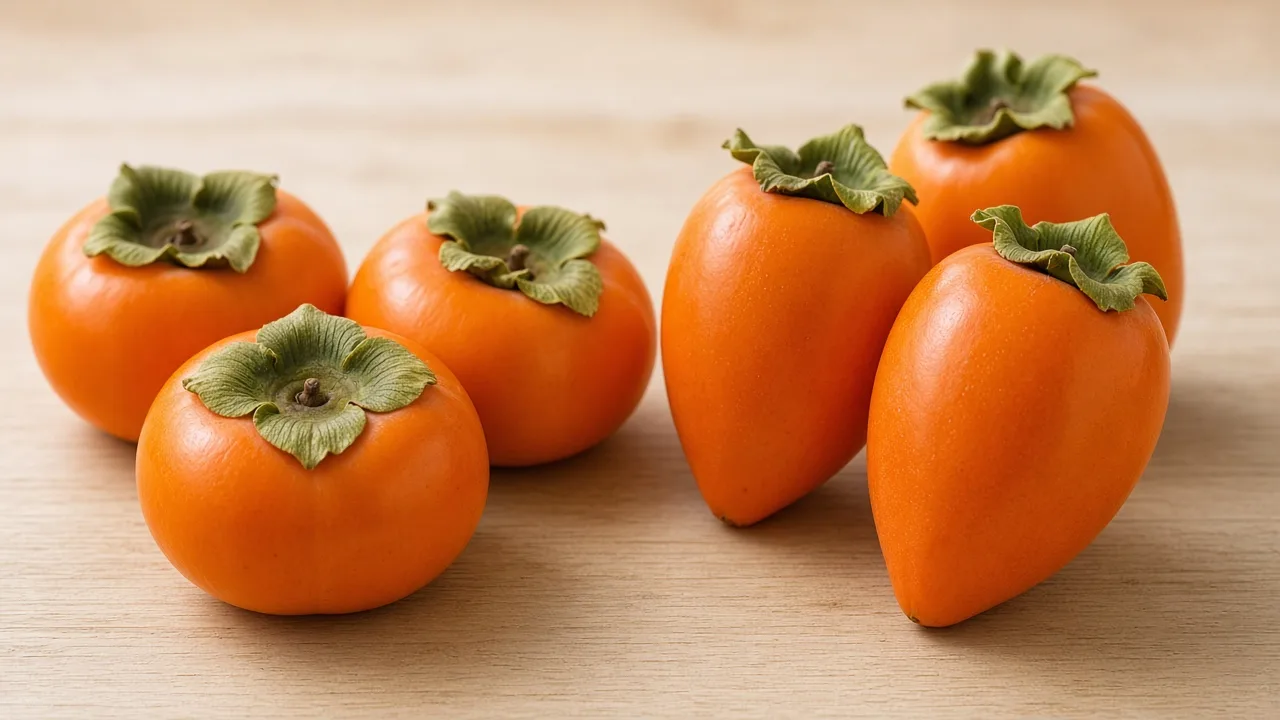
To eat a persimmon, first check the variety. Fuyu persimmons are round and flattened and can be sliced and eaten while firm, like an apple, skin and all. Hachiya persimmons are generally elongated and pointed and must be fully ripe and very soft before eating. Cut a ripe Hachiya in half and scoop out the sweet flesh with a spoon.
Persimmons are commonly enjoyed during fall and early winter. They can be eaten fresh or used in salads, smoothies, breakfast bowls, and baked goods. This guide explains the main types of persimmons, how to tell when one is ripe, how to cut it, and easy ways to enjoy the fruit at home.
What Is a Persimmon?
A persimmon is an edible fruit known for its orange skin and naturally sweet flavor. Depending on the variety and ripeness, its texture can range from crisp and firm to soft and custard-like.
Persimmons can be eaten fresh or incorporated into sweet and savory dishes. They are particularly useful in seasonal recipes because their sweetness complements ingredients such as leafy greens, nuts, yogurt, and warm spices.
North Carolina is also home to the native American persimmon, which grows wild across the state. Fuyu and Hachiya are two varieties commonly discussed in recipes and grocery-shopping guides.
Types of Persimmons: Fuyu vs. Hachiya
Fuyu and Hachiya persimmons differ in shape, texture, and the ripeness needed before eating. Identifying the variety helps you prepare the fruit correctly.
Fuyu Persimmons
Fuyu persimmons are round and slightly flattened, resembling a tomato. They are non-astringent, which means they can be eaten while firm without the intense mouth-drying sensation associated with unripe Hachiya persimmons.
Their flesh is crisp when firm and becomes softer as the fruit ripens. Fuyu persimmons work well in fresh snacks, salads, and sliced fruit platters.
How to eat them: Wash the fruit, remove the green top, slice it into rounds or wedges, and enjoy it with the skin on or peeled.
Hachiya Persimmons
Hachiya persimmons generally have an elongated shape with a pointed bottom. They are astringent when unripe because of their high concentration of soluble tannins.
Wait until a Hachiya is very soft before eating it. When fully ripe, the flesh becomes smooth, sweet, and almost custard-like.
How to eat them: Cut the ripe fruit in half and scoop out the flesh with a spoon. The pulp can also be used in smoothies and baking.
Fuyu vs. Hachiya: What's the Difference?
| Feature | Fuyu Persimmon | Hachiya Persimmon |
|---|---|---|
| Shape | Round and flattened | Elongated and pointed |
| Texture when ready to eat | Firm to slightly tender | Very soft and jelly-like |
| Flavor | Sweet and mild | Sweet when fully ripe |
| Best uses | Fresh snacks and salads | Scooping, baking, and smoothies |
| Can you eat it firm? | Yes | Wait until fully ripe and soft |
How to Tell If a Persimmon Is Ripe
Color can help you assess ripeness, but texture is especially important. The ideal texture depends on the variety.
Signs of a Ripe Fuyu Persimmon
A ripe Fuyu typically has orange skin and firm flesh. It may yield slightly when pressed gently but should not feel mushy.
You can eat a Fuyu while it is crisp or let it soften for a more tender texture.
Signs of a Ripe Hachiya Persimmon
A ripe Hachiya should feel extremely soft throughout, with a jelly-like consistency. Its skin may become slightly wrinkled as it ripens.
If the fruit still feels firm, leave it at room temperature for longer. Eating an unripe Hachiya can produce a strong, unpleasant, mouth-drying sensation.
How to Ripen Persimmons at Home
If your persimmons are not ready to eat, you can help them ripen naturally.
- Leave them at room temperature. Keep unripe persimmons away from direct sunlight.
- Check the texture daily. Gently press the fruit to monitor its softness.
- Use a paper bag if needed. Placing a Hachiya in a paper bag with a ripe apple or banana may speed up ripening because these fruits release ethylene gas.
- Refrigerate ripe fruit. Once the fruit reaches the desired ripeness, refrigerate it to help maintain its quality.
Ripening time varies, so use the fruit's texture rather than a fixed number of days to determine when it is ready.
How to Eat a Persimmon Step by Step
Preparing a persimmon is simple once you know which variety you have.
Step 1: Wash the Fruit
Rinse the persimmon under clean running water and gently dry it with a clean towel.
Step 2: Remove the Green Top
Use a small knife to remove the leafy green cap, called the calyx.
Step 3: How to Cut a Persimmon (Slice or Scoop)
For a Fuyu persimmon, cut the fruit into thin rounds or wedges. Remove any seeds you find, then enjoy the slices with the skin on or peel the fruit if you prefer.
For a fully ripe Hachiya, cut it in half, remove any seeds, and scoop out the soft flesh with a spoon. You can also use the pulp in recipes that call for mashed or pureed fruit.
Step 4: Serve and Enjoy
Eat your persimmon on its own, add slices to a salad, or mix the fruit into breakfast bowls, smoothies, and baked goods.
Can You Eat Persimmon Skin?
Yes, persimmon skin is edible. Many people eat Fuyu persimmons with the skin on because it is relatively thin.
Wash the fruit thoroughly before eating it. Peeling is optional and depends on your texture preference or recipe.
Hachiya persimmons are usually eaten by scooping out the flesh once fully ripe, so the skin is often left behind.
6 Easy Persimmon Recipe Ideas
Persimmons can be used in simple snacks, breakfast dishes, salads, and desserts. Here are six easy ways to enjoy them.
1. Fresh Persimmon Slices
Slice a firm Fuyu persimmon into wedges and enjoy it as a snack. Its crisp texture and natural sweetness make it easy to add to a fruit platter.
2. Persimmon Salad
Combine thinly sliced Fuyu persimmons with leafy greens, pomegranate seeds, and toasted walnuts. Dress with olive oil and a little lemon juice for a simple salad.
3. Persimmon Breakfast Bowl
Add diced persimmons to oatmeal or yogurt with cinnamon and chopped nuts for a naturally sweet breakfast.
4. Persimmon Smoothie
Blend ripe persimmon flesh with yogurt or your preferred milk, a banana, and a pinch of cinnamon. Use soft, ripe fruit for a smooth consistency.
5. Persimmon Bread and Muffins
Use soft, ripe persimmons in quick breads, muffins, cookies, and cakes. Hachiya pulp is particularly useful because its soft texture blends easily into baking mixtures.
6. Persimmons With Cheese and Nuts
Serve fresh persimmon slices with cheese, nuts, and crackers for a simple appetizer or snack. The fruit's sweetness contrasts nicely with savory and creamy ingredients.
How to Store Persimmons
Proper storage helps preserve the fruit's texture and flavor.
- Unripe Hachiya persimmons: Leave them at room temperature until very soft.
- Firm Fuyu persimmons: Refrigerate them if you want to maintain their crisp texture for longer.
- Ripe persimmons: Store them in the refrigerator and handle very soft fruit gently.
- Cut persimmons: Place them in an airtight container in the refrigerator and use them promptly.
Avoid eating fruit with extensive mold, leaking areas, or other signs of spoilage.
Frequently Asked Questions About Persimmons
What happens if you eat an unripe persimmon?
An unripe Hachiya persimmon can cause an intense astringent sensation that makes your mouth feel dry and puckered. Wait until it is fully soft before eating. Fuyu persimmons can be enjoyed while firm.
What does a persimmon taste like?
Persimmons are naturally sweet, with flavors that may remind you of honey or apricot. Fuyu persimmons are crisp when firm, while fully ripe Hachiya persimmons have a softer, richer texture.
Are persimmons healthy?
Persimmons provide dietary fiber and nutrients, including vitamin C and vitamin A. They can be enjoyed as part of a varied, balanced diet.
Shop Seasonal Produce at Albaraka in Raleigh
Explore the seasonal produce available at Albaraka Mediterranean Market & Grill in Raleigh and find inspiration for your next meal.
Visit the market on your next grocery trip. Albaraka has served families from Raleigh, Cary, and Durham since 2003.
Shop This in Raleigh
Albaraka Market & Grill 3815 Hillsborough St, Raleigh, NC 27607 (919) 838-5155 Open Mon–Thu 8 AM–10 PM, Fri–Sat 8 AM–12 AM · Sun 9 AM–9 PM


